Working out how to choose a childcare centre usually starts with a list: location, hours, cost, maybe a curriculum name you’ve half heard of. Those things matter, but they won’t tell you what a day actually feels like for your child, or how safe they’ll be when you’re not in the room.
This guide walks through what matters when comparing centres: the type of care, accreditation, curriculum, cost, and what’s genuinely included, plus the harder-to-judge things like staff training, consistency, and cultural safety, and what to ask about each on a tour.
What type of childcare actually fits your family?
Before you compare individual centres, it helps to know which type of care you’re actually looking for:
- Long day care. Full-day sessions, usually 8 hours or more, for children from birth to school age. This is the most common option for working families.
- Family day care. Care in an educator’s own home, usually for smaller groups. Some families prefer the home-style setting, especially for babies.
- Occasional care. Casual, as-needed sessions rather than a fixed weekly place, useful for irregular work patterns.
- Kindergarten and preschool programs. Structured, school-readiness-focused sessions for three and four-year-olds, often available as a standalone program or bundled into a long day care place.
Location, operating hours and waitlists
A centre on your commute, or close to home, makes the daily routine easier to sustain over years, not just weeks. Check opening and closing times against your actual work hours, including pickup buffer time, not just the advertised hours.
Waitlists are worth asking about early. Demand varies a lot by suburb and age group, and popular centres can fill rooms well ahead of an expected start date, so it’s worth enquiring even if you’re still a few months from needing a place.
Understanding accreditation and quality ratings
Every approved education and care service in Australia is assessed by its state or territory regulatory authority against the National Quality Standard (NQS), which covers seven quality areas including educational program, safety, staffing and governance.
Services are rated on a five-point scale, from Significant Improvement Required, through Working Towards NQS, Meeting NQS and Exceeding NQS, up to Excellent. The current rating has to be displayed at the service, and you can also check it on the ACECQA national register before you visit.
A high rating is a genuinely useful filter, but it’s a point-in-time assessment. It’s still worth asking how the centre keeps standards up between assessments, not just what the last rating said.
Curriculum and learning philosophy
Australia’s national curriculum for children from birth to five is the Early Years Learning Framework, known as Belonging, Being and Becoming. It’s delivered through a mix of play-based exploration and more structured, educator-led experiences, and every approved service has to base its program on it.
Where centres differ is in how that plays out day-to-day: how much outdoor and nature-based learning is built in, how school readiness is approached in the lead-up to kinder, and what else sits alongside the core curriculum.
Ask to see a sample daily program, and how much of it is outdoor and child-led versus structured and desk-based, especially in the lead-up to school. There’s no universally right balance, only the one that suits your child.
Environment, meals and daily routines
A short visit tells you a lot: whether outdoor space is genuinely used or just present, whether rooms are set up for the age group in them, and whether the pace of the day looks calm rather than rushed.
Ask how meals are handled, including any dietary or allergy requirements specific to your child, and how rest and sleep are managed for younger children. Ask to see the menu and how allergy management actually works day to day, not just whether it’s “catered for.” A centre that can show you the process, rather than describe it in general terms, is the one actually doing it.
Cost, the Child Care Subsidy and what's actually included
The Child Care Subsidy is the Australian Government’s main support for families, paid directly to your provider to reduce the fee you pay out of pocket. What you receive depends on your family’s combined income, the hours of recognised activity (work, study or similar) you and your partner do, and the type of care you use, so it’s worth checking your own circumstances against the current settings rather than assuming a standard rate applies. Try our Child Care Subsidy calculator here.
Beyond the subsidy, ask exactly what’s included in the daily fee and what’s charged separately. Nappies, incursions, excursions and late pickup fees can all sit outside the headline price at some centres. Ask for the full fee schedule up front, not just the daily rate, so you’re comparing real cost to real cost.
Communication and family involvement
Find out how the centre keeps you in the loop day to day: an app, a diary, or conversations at pickup, and how quickly you’d hear about anything significant. A good orientation process for a new enrolment matters too, since how a centre settles your child in during the first weeks says a lot about how it operates generally.
Family involvement is also worth asking about, beyond the standard newsletter. Ask how families are actually brought into the centre’s life, not just informed about it, and how often that happens rather than once a year.
Safety is more than a locked gate and a sign-in sheet
Secure entry, supervision and a clean, well-maintained centre are the baseline, not the differentiator.
The more useful question is what happens around the edges: who’s actually in the room with your child, how well they know them, and what they’ve been trained to do if something goes wrong.
Safety is more than a locked gate and a sign-in sheet
Secure entry, supervision and a clean, well-maintained centre are the baseline, not the differentiator.
The more useful question is what happens around the edges: who’s actually in the room with your child, how well they know them, and what they’ve been trained to do if something goes wrong.
Staff training that goes beyond the compliance minimum
All educators in Australia work towards or hold an approved qualification, and services have to meet ongoing professional development obligations under the National Quality Framework. That’s the floor, not the ceiling, and it’s worth asking each centre what sits above it.
Ask specifically what training happens beyond the legal minimum, and how often. A centre with a real answer, rather than a vague “we’re always training,” is the one that’s actually invested in it.
Questions worth asking on a tour
Beyond the standard “what’s your ratio” question, these go further:
- How do new staff get trained before they’re left alone with a room of children?
- What happens if my child’s regular educator is sick or on leave? Who steps in?
- How long have the educators in my child’s room been at this centre?
- What’s your process if a child needs medical attention, and how is it communicated to me?
- How do you make sure every educator, not only senior staff, knows about my child’s allergies or medical needs?
A centre that answers these specifically, rather than in general terms, is one that has actually thought about them.
Visiting in person: what to look for, and reviews worth trusting
A website and a brochure can only tell you so much. Book a tour at each centre on your shortlist and pay attention to how educators actually talk to children, not just how the space looks in photos.
Online reviews are a useful second check, particularly patterns across many reviews rather than any single one. Look for what comes up repeatedly, good or bad, rather than the best or worst single comment, and weigh how long the reviewer’s child was actually enrolled.
Cultural safety and belonging matter too
Choosing a centre also means choosing the community your child spends their days in. A culturally safe centre doesn’t just avoid causing harm: it actively builds children’s understanding of, and respect for, different backgrounds and experiences, including Aboriginal and Torres Strait Islander culture and history.
Ask how this actually shows up day to day, not just on a cultural awareness day once a year. A centre that can point to something specific and ongoing is doing more than ticking a box.
What this looks like day to day at Choklits
Every one of those questions has a real answer here;
- Type of care: long day care across all three centres, with Three-Year-Old and Four-Year-Old Kinder Programs built in and Free Kinder available for both.
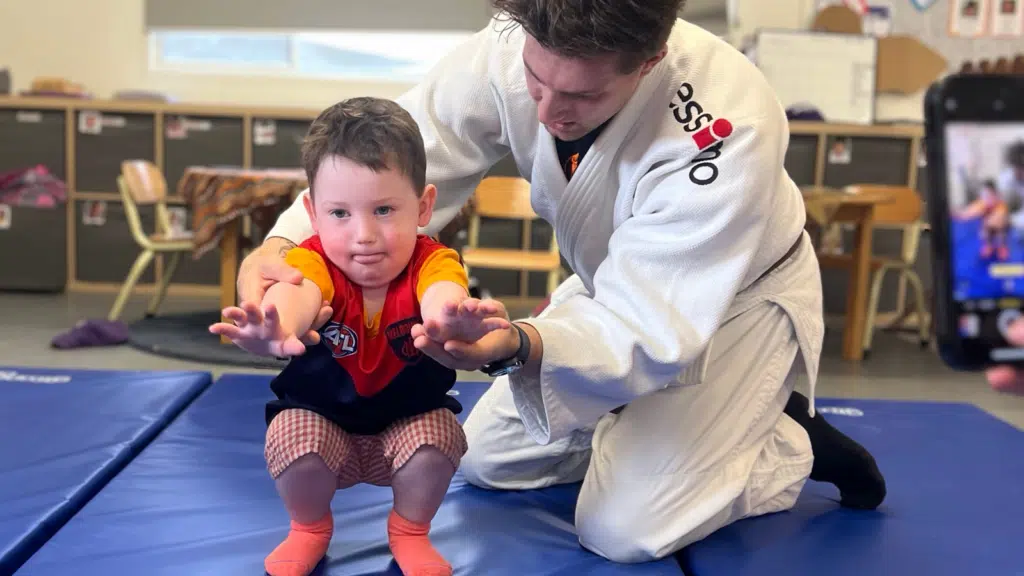
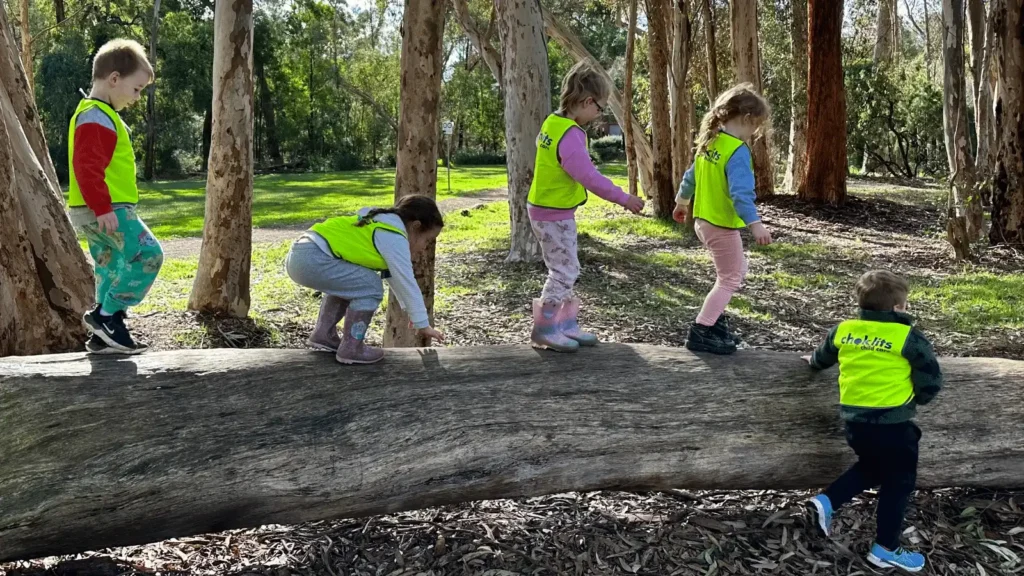
- Curriculum: a regular bush kinder program, in-house allied health input and visits from Dr Rob, alongside music, yoga, cooking and structured school readiness, all part of CHOKLITS+.
- Meals: a food and nutrition program approved by Nutrition Australia, with dietary and allergy needs catered for as standard, not treated as a special request.
- Staff training: educators complete required compliance training, then Choklits’ own additional program covering supervision habits, escalation and how the team responds together, not just individually.
- Reputation: 350+ five-star reviews across its Melbourne centres, and family-owned and operated rather than part of a corporate chain.
- Cultural safety: embedded, ongoing learning about Aboriginal and Torres Strait Islander culture and history, including the story of Bunjil and connection to Country.
- What’s included: more than 600 additional incursions and excursions in the last 12 months, covered by the standard daily fee rather than billed as extras.
The best way to judge all of this for yourself is to book a tour and see a centre running on a normal day.
Book a tour at one of our childcare centres today and experience the Choklits difference for yourself.
Frequently asked questions
What's the difference between long day care and family day care?
Long day care runs from a dedicated centre with a team of educators, usually for eight hours or more a day. Family day care is based in an educator’s own home, often in smaller groups, which some families prefer for babies and toddlers.
How does the Child Care Subsidy actually work?
It’s paid directly to your provider and reduces your out-of-pocket fee. The amount depends on your family’s combined income, the hours of recognised activity you do, and the type of care, so it’s worth checking your own circumstances rather than assuming a flat rate.
What questions should I ask about safety at a childcare centre?
Ask about staff training beyond the legal minimum, how leave and absences are covered, and how long the educators in your child’s room have been at the centre, alongside the standard questions about supervision and emergency procedures.
What's a good staff-to-child ratio?
Ratios are set nationally and increase as children get older. Ask each centre to confirm its current ratio and National Quality Standard rating rather than relying on a general figure, since exact numbers can vary by state.
How do I know if a centre takes cultural safety seriously?
Look for it in the everyday program, not just a single event on the calendar: regular, embedded learning about different cultures and backgrounds, including Aboriginal and Torres Strait Islander history and perspectives.
Choosing a childcare centre is rarely about finding the one with the longest list of features. It’s about finding the team that will actually be consistent, well trained and genuinely present for your child, day after day.