
While we don’t follow the school terms here at Choklits Child Care, we love school holiday time! Why, might you ask? Well, its because of the host of fabulous activities, many of them free, that are put on for kids. In this blog, we are going to share some of our favourites for this year, to give you some inspiration and ideas for where you might like to take your little ones for some extra exploring. Keep reading for our collated list of fabulous, free activities for kids in Melbourne this winter.
21st June – 9th October 2022
Location: National Gallery of Victoria
Cost: Free
Making Art: Imagine Everything is Real is an exhibition open to people of any age, that invites children and their families to experiment with innovative ways of making their own works of art. It’s a brilliant ‘yes space’ where children can manipulate the environment in four distinct activity areas to reflect their creative vision. Audiences can explore multiple mediums, such as large-scale sculptures, paper collage, poetry and drawing.
Parents of children with sensory challenges will appreciate the exclusive relaxed sessions on offer, which give people the opportunity to enjoy a quieter gallery experience with fewer people and reduced sensory stimuli, to prevent overstimulation and make the environment less overwhelming.
Until 10th July 2022
Location: Marvel Stadium and MCG
Cost: Free for kids
Do you have a little footy fan in your house? Well, you’re in luck, because kids 14 years and under can score a free ticket to all games up to round 17! Click here to check out when your team is playing, and here for extra info about the offer so you can book your tickets.
1st July – 3rd July 2022, from 5pm
Location: Harbour Esplanade & Newquay Promenade, Docklands
Cost: Free
The Firelight Festival is back for three nights, with brilliant fire installations, talented performers and fantastic light shows. This year the shows will feature a larger than life fiery phoenix, and a mesmerising liquid, laser and light show.
Children and adults alike will be delighted by the fire sculptures, flame jets, fire twirlers and flaming trumpeters; the perfect entertainment on a chilly winter night.
Click here to find out more.
Open until the 10th of July
Location: Level 7, Myer Melbourne, 314/336 Bourke St, Melbourne 3004
Cost: Free
We have many little dinosaur lovers at Choklits, and this exciting activity will be right up their alley! Jurassic World at Myer Melbourne features a dinosaur enclosure with large animatronic dinosaurs in detailed habitats, complete with an eight metre long T-Rex! Budding palaeontologists will be delighted by the amber fossil workshop and kids can also take part in an AR dinosaur experience. To learn more, click here.
Friday the 8th of July, 10:30am
Location: Fed Square, Swanston St & Flinders St, Melbourne 3000
Cost: Free
The Mad Hatter’s Tea Party is part of the City of Melbourne Libraries’ Alice in Wonderland School Holiday Program, and is for all children under the age of five.
“Bring along your tiniest rabbit, tumble down the rabbit hole, and attend this most entertaining morning of mind-bending stories and songs. Don’t be late for this very important date.” ~ What’s On Melbourne
On until the 31st of December, 10am – 4pm daily
Location: Fitzroy Gardens Visitor Centre, Wellington Parade, East Melbourne 3002
Cost: Free
Not sure what to do with the kids on a sunny winter day? Get out and about for some great entertainment by taking on the outdoor adventure challenge in the heritage-listed Fitzroy Gardens. Kids can collect a map from the Fitzroy Gardens Visitor Centre, and head off on a hunt to answer 12 questions around the garden.
We recommend this activity for ages four and up, with help from an adult ready to sleuth! Click here for more information.
We really are spoilt for choice when it comes to wonderful, free things to do with kids in Melbourne this winter. We can’t wait to hear about your adventures when we see your child next at Choklits!
This list is merely the tip of the iceberg of awesome activities to discover, so if you’re keen to find even more great activities to keep your kids occupied, check out this list of 2022 Winter School Holiday Events.
Incursions are experiences that allow children to connect with different people in the community, enriching their experiences and exposing them to varied stimuli and situations. In particular, incursions provide a new and exciting experience within an environment the children are familiar and comfortable with, enhancing their confidence to experiment and explore. Children benefit immensely from incursions in a multitude of ways, such as acquiring varied knowledge that diverse individuals can offer in terms of learning, building relationships, connecting with others and learning new things about our world.
We saw this in action during a recent incursion with Reptile Encounters at Choklits Ringwood, where our brilliant presenter Lucy introduced the kindergarten class to an assortment of scaly friends.
Reptile Encounters’ aim is to “instil respect for nature at an early age while preserving the idea that conservation is necessary in maintaining Australia’s wildlife”, which resonated with our values here at Choklits. Our kindergarteners cherish their time spent in our outdoor areas each day and show their love of all things nature often. There is also a lot of fascination in this age group with animals, especially as the children are becoming bolder and more curious about other living things in their world, so this reptile incursion was very highly anticipated!
Lucy from Reptile Encounters brought along a saltwater crocodile, a Murray River turtle, a shingleback lizard, a frilled neck lizard, Woma and Olive pythons, a green tree frog and a spiny leaf insect, giving us the opportunity to pat them all! Some children could not have been more excited to hold every single one, whereas others were a bit more apprehensive. With the support of their educators and Lucy’s guidance, by the end of the session, even the children who were a little bit scared had the courage to pat some of the largest animals. It was so wonderful to see the children encouraging each other, acknowledging tricky emotions like nervousness and fear and celebrating each other’s’ bravery to engage with the creatures.
Many of the children shared their knowledge of reptiles, and Lucy taught us lots of fun and interesting facts about the amazing animals we got to meet. Here are some of the awesome things we learnt:
We loved learning new things about the animals we share Australia with!
A guiding statement in the Early Years Learning Framework, the curriculum that underpins what we do here at Choklits, is;
“”Children develop dispositions for learning such as curiosity, confidence, commitment enthusiasm, persistence, imagination and reflexivity; this is evident when children express wonder and interest in their environment and are curious and enthusiastic participants in their learning”
Every single one of these dispositions were embodied in our reptile incursion. Through the children’s eyes, we could see how wondrous and thrilling the interactions with new and familiar reptiles and amphibians were for them. We noted the bravery and resilience shown by the children, some of whom blew us away with their unexpected willingness to drape a snake around their neck or pat a toothy crocodile.
This led us to reflect on the relationships the children have built with their educators and other adults that support them to develop these dispositions. Our presenter Lucy’s fantastic energy fed the children’s innate curiosity and openness, which alongside the confidence that comes from their trusted educators, emboldened them to engage with the animals. They listened intently to the fascinating reptile facts Lucy shared and were bubbling with excitement to ask questions about each new friend that was brought out.
Relationships truly are the foundation of learning, which we see again and again, especially on exciting days like our reptile incursion.
American Psychologist Urie Bronfenbrenner is considered a pioneer in the field of understanding early childhood development. He speaks about the complex system of relationships that interact to influence the development of children from an early age and the significance of those relationships, individually and in tandem. The diagram to the right is a visual representation of his ecological systems theory, which depicts a child’s relationships within their family, community and wider society. In the centre is the child, surrounded most closely by their family, and then other vital influences like extended families, learning environments, neighbourhoods, history, culture, law and other larger systems influencing the child.
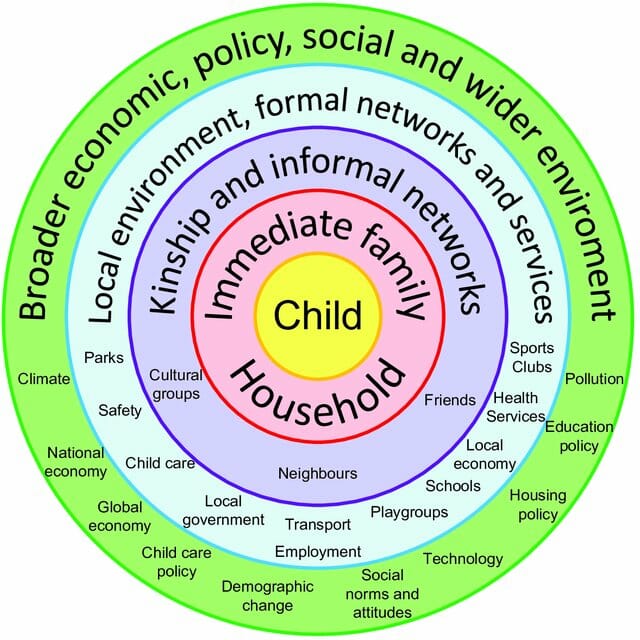
In life and in this model, we can see that the first circle surrounding the child, family, is identified as one of the most significant influences in a child’s life. Events like Mother’s Day give us the chance to reflect on how valuable these relationships are and an occasion to celebrate them.
As our Choklits community continues to grow, we were joyful to host two events for Mother’s Day this year, at Choklits Ringwood and our new centre, Choklits in Surrey Hills.
Plentiful Planning and Preparation went into ensuring that we could provide the best Choklits experience for everyone in our community during this special event. This takes the collaboration of many people, from our maintenance superhero, Ryan, who made sure our grounds were in tip-top shape, to the educators, children, leadership team and of course, our wonderful families, without whom this event wouldn’t exist. This kind of teamwork is special to us at Choklits, as collaboration is one of the five key pillars of our philosophy.
Mother’s Day is all about celebrating mothers, and a key connection in doing this for children is through gifts. The joy a child feels when presenting their mother with a special gift they made themselves is a beautiful thing to witness, as are the contributions it makes to boosting their confidence, self-efficacy and expression of gratitude. At Choklits, this comprised just under 200 presents, each thought out to reflect the age and developmental stage of each child, from the babies right through to the kindergarteners.
Here’s a little summary of the projects the children at Choklits undertook for their mums;
Tasty, nutritious food made fresh onsite is a point of difference we’re proud of here at Choklits, so we showcased the thought and effort that goes into the menus, nutrition and taste behind every meal or snack offered at Choklits with a yummy snack box perfect for families and little hands to share. This year, we offered tzatziki, pita crisps, cake and seasonal grapes – with a sneaky Chokliteer in every box! Of course, being Choklits, no added sugar was used, and we provided gluten and dairy free options to cater to everyone’s needs.
To reflect our play-based framework, the way research shows children learn best, we provided open-ended experiences for our children to share with their families. These included drawing, playdough, clay, threading and painting with native flowers, to engage their senses and activate fine motor practice.
Let’s not forget our classic favourite – the photo booth! We love capturing the fun, joy and love of all our community; educators, children, mums, aunties and grandmothers sharing special moments together. Aren’t the photos just gorgeous!
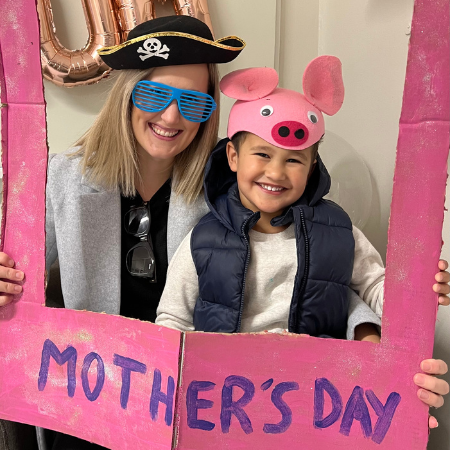
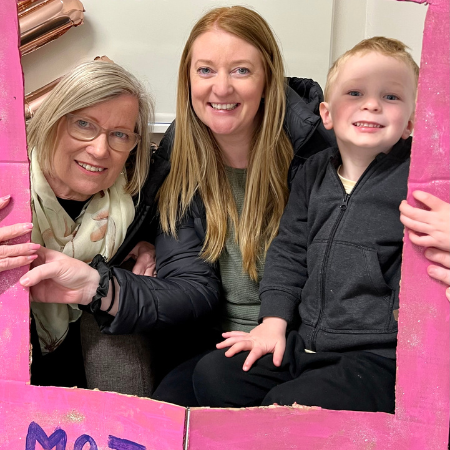
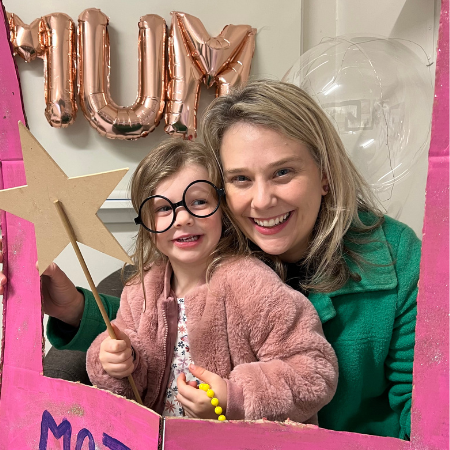
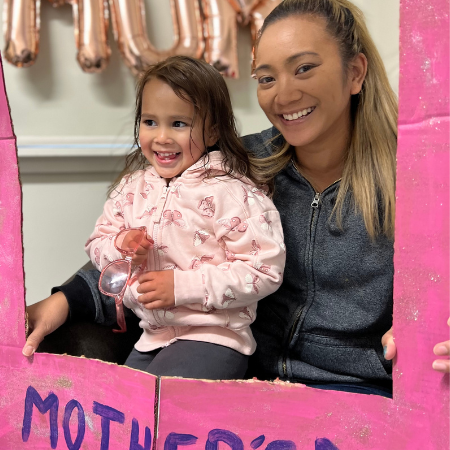
We’ve touched on the diversity of Choklits before, like in our blog about culture, and we could really see it embodied in the multi-generational guests and varied representation of mother-figures at both Mother’s Day celebrations.
Our community shapes our Calendar of Events throughout the year, including family days like Father’s Day and Grandparent’s Day, cultural events like Easter, Reconciliation Week, Christmas, Diwali and other opportunities to include representations of our diverse community.
Especially in the current climate of building back up as we take a (maskless) breath after the last two years of COVID, lockdowns, rules and isolation, it really feels like rediscovering the pleasure of connecting with others and being able to meet together again for these occasions is truly special. We don’t think we will ever forget how much we appreciate these times of coming together as a community to celebrate, and we hope this impression will be left on the children and families in our Choklits community as well.
Significant events such as ANZAC Day are deeply ingrained in the Australian experience and our country’s history. At Choklits, we appreciate the benefits of sharing these days with our youngest Australians and helping them to participate in age-appropriate and developmentally applicable ways as it helps to shape their understanding of shared culture and identity.
Children naturally have a fascination with the past, and in the 3-5 year old room, many of our learners will be beginning to actively engage with and develop their understanding of the traditions associated with important events such as ANZAC Day, through their ability to make connections with their learning from prior years. To capitalise on this opportunity and support the children’s symbolic understanding of ANZAC Day, we focus on similar activities each year, such as making ANZAC biscuits and poppy inspired crafts, with graduated increases in participation and independence to support each child at their individual stage. Keep reading to hear about how we commemorated ANZAC Day in the 3-5 year old room and the baby room at Choklits Child Care Surrey Hills in 2022.
This year, the children in the 3-5 year old room at the Choklits Surrey Hills Centre enjoyed making ANZAC biscuits with lead educator Dee. Cooking has a multitude of benefits for children as it allows them to practice many skills in a fun and interactive environment, including the scooping, measuring and pouring of ingredients, and stirring, rolling and placement of the dough. It’s a favourite activity among children and educators alike!
To begin with, Dee prompted a discussion about the ANZAC biscuits they were going to bake and why they were making them, to lead into linking the concept back to their discussions about ANZAC day. Many children in this room already had an idea of what ANZAC Day was, and were keen to share their knowledge and experiences with their educators and peers which led to a rich and collaborative discussion where we all learnt things from each other.
Children explore the world with all their senses, particularly touch, so the first step to any cooking activity is to wash our hands, and rewash any time mouths or faces are touched, to ensure our germs stay out of the tasty food we were making.
Once everyone was ready, the children were given the opportunity to explore each of the ingredients – rolled oats, shredded coconut, baking powder, coconut oil, honey and vanilla extract – with their senses, and were prompted by their educators to discuss the different colours, textures, smells and tastes. Cooking is a brilliant activity for children to further their understanding of cause and effect, which is why exploring the ingredients at every stage of the cooking process and observing the changes they undergo is a key focus.
For example, a portion of the rolled oats were ground into oat flour, using a noisy blender, where the children recognised that they retained a similar colour but had a very different texture. This was different to the coconut oil, which changed from a white solid to a clear liquid when melted using heat, and the dough which got darker when all mixed together. There was abundant fascination about how each of the ingredients changed throughout the baking process. This begins to develop children’s preliminary understanding of scientific concepts like states of matter and physical changes.
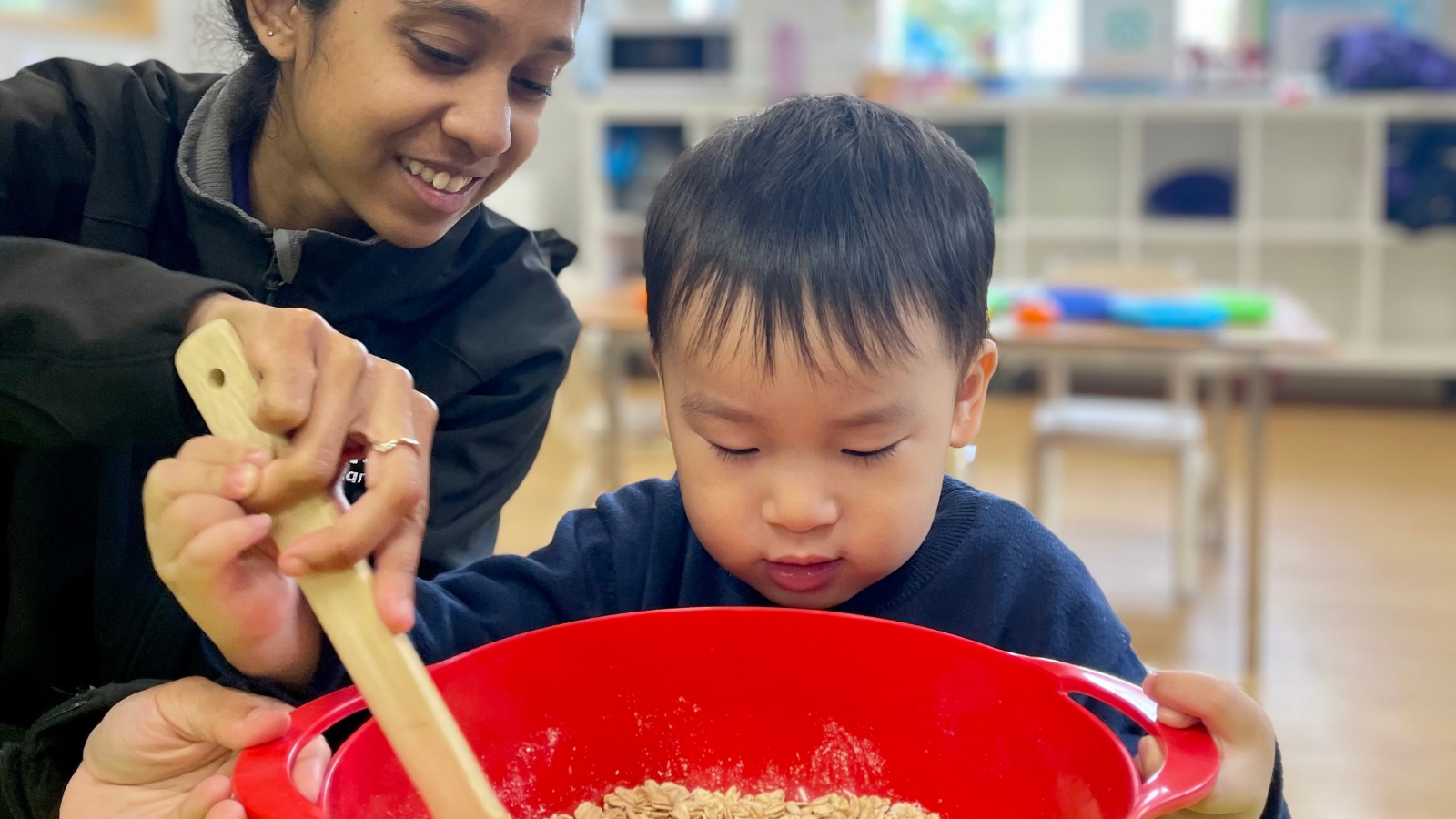
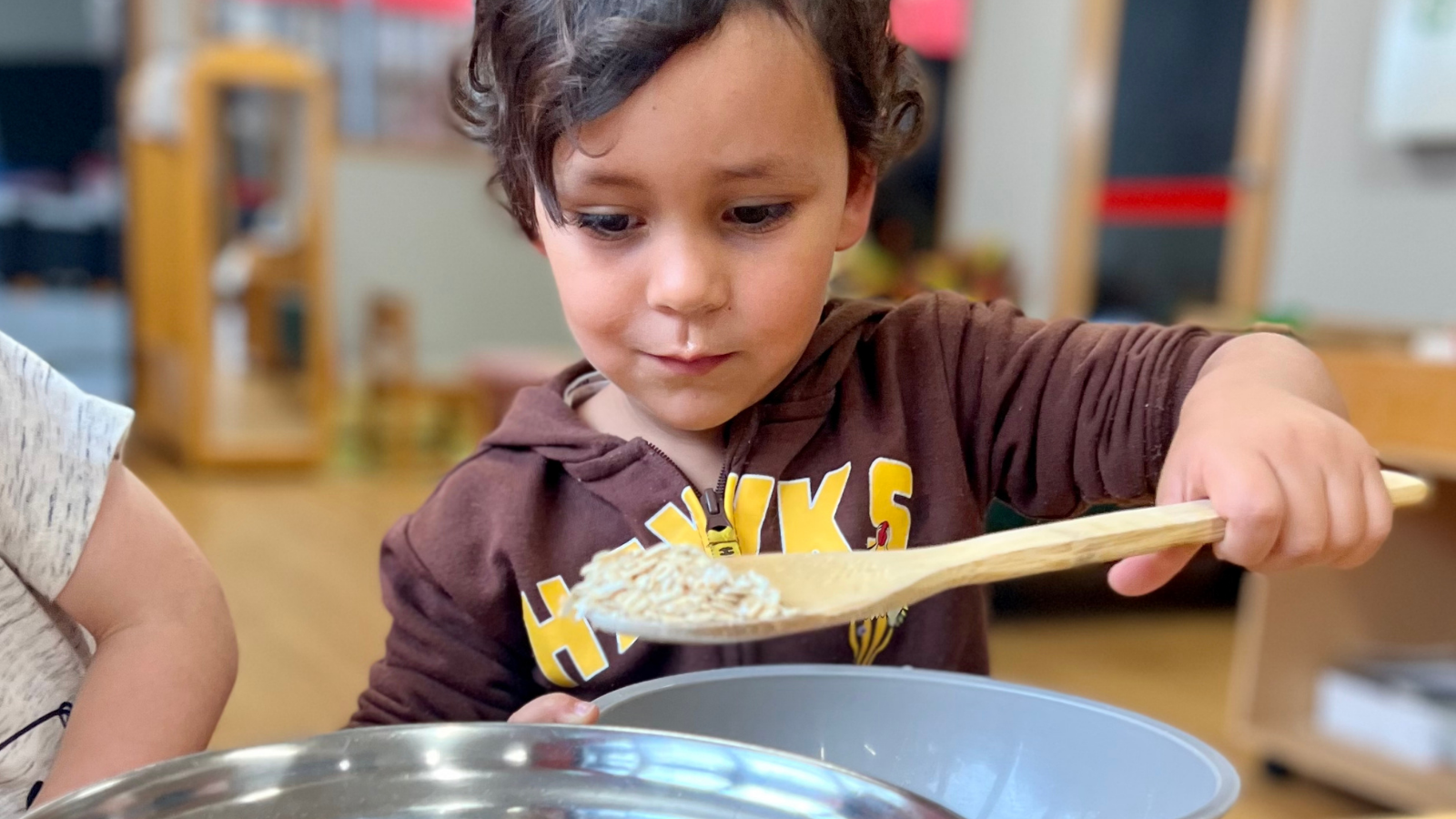
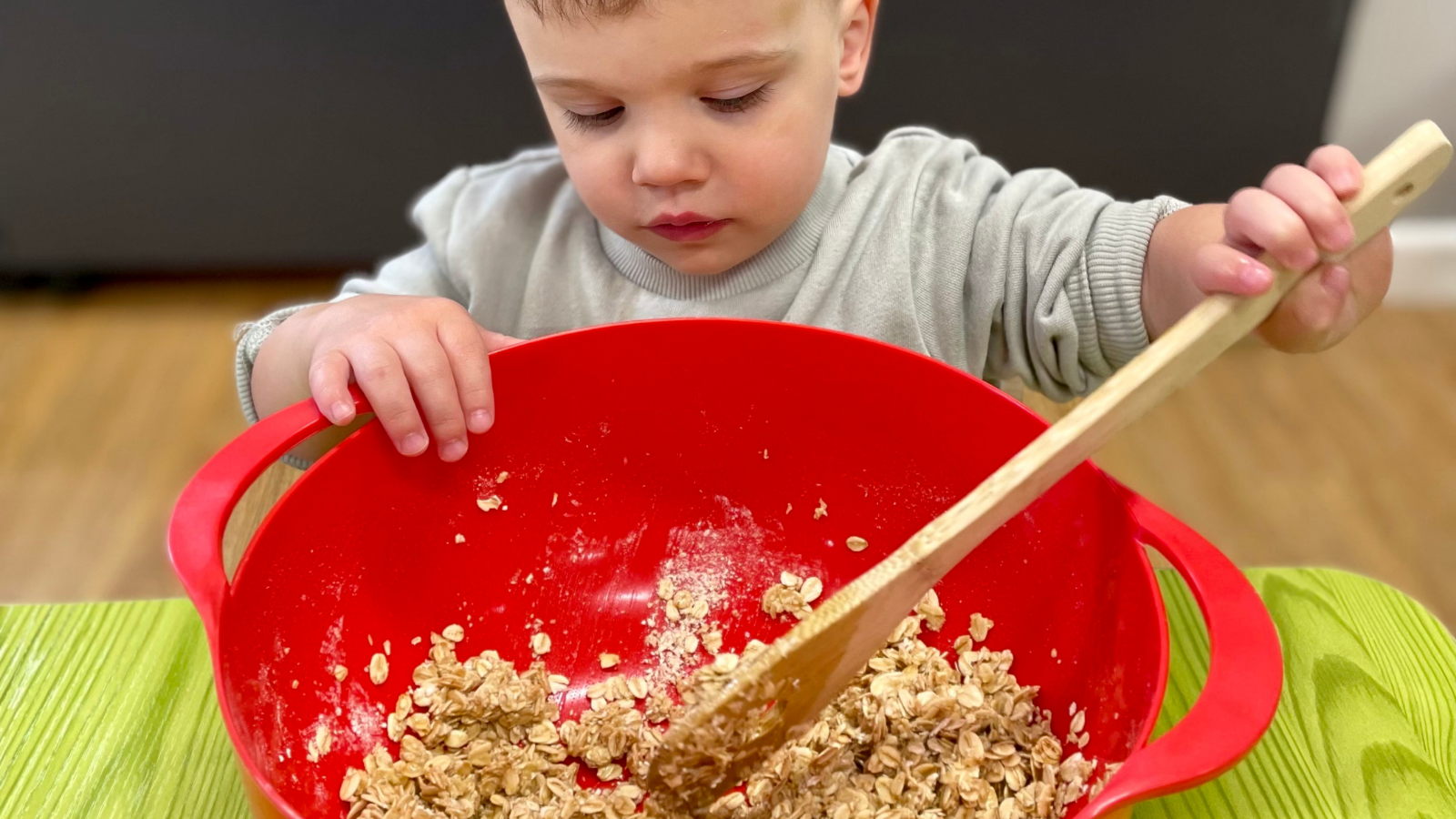
Adding the ingredients to the bowl was a crowd favourite part of the process, second only to enjoying the delicious treat at the end, and the children did a wonderful job of taking turns to add ingredients and mix them together with the wooden spoon. Once our dough was homogenous, the children developed their hand-eye coordination by rolling the biscuits into balls and placing them on a tray to bake in the oven. It was wonderful to see the kids helping each other; an important theme of ANZAC Day, particularly for children (more on that below!).
Their fine motor skills were challenged in this exercise, through adding smaller amounts of ingredients like vanilla and rolling the dough into balls, while their gross motor skills were developed with movements like stirring. They were also encouraged to use their ‘helping hand’ to hold the bowl still while their dominant hand stirred, aiding their development of this important pre-writing skill. If you’re interested in reading more about this concept, other pre writing skills and why they are important, check out our blog on the subject here.
Making ANZAC biscuits with the kindergarteners was a great way to connect with ANZAC Day and explore science and numeracy concepts, as well as fostering positive interactions with food, which ties in with our nutrition and no-packet policies.
Cooking our own food is very important to us here at Choklits, and one of the key pillars to children developing life-long healthy eating habits. By actively involving them in food preparation, it boosts their comfort with different ingredients and confidence in the kitchen, helping to expand their diets and supporting their knowledge about cooking.
Poppies are a well-recognised symbol of ANZAC Day, and feature prominently in our ANZAC Day related learning at Choklits Child Care. To complete their poppy paintings, the children in the baby room were offered both cotton balls and paintbrushes to diversify their experience with different utensils and encourage pincer grip.
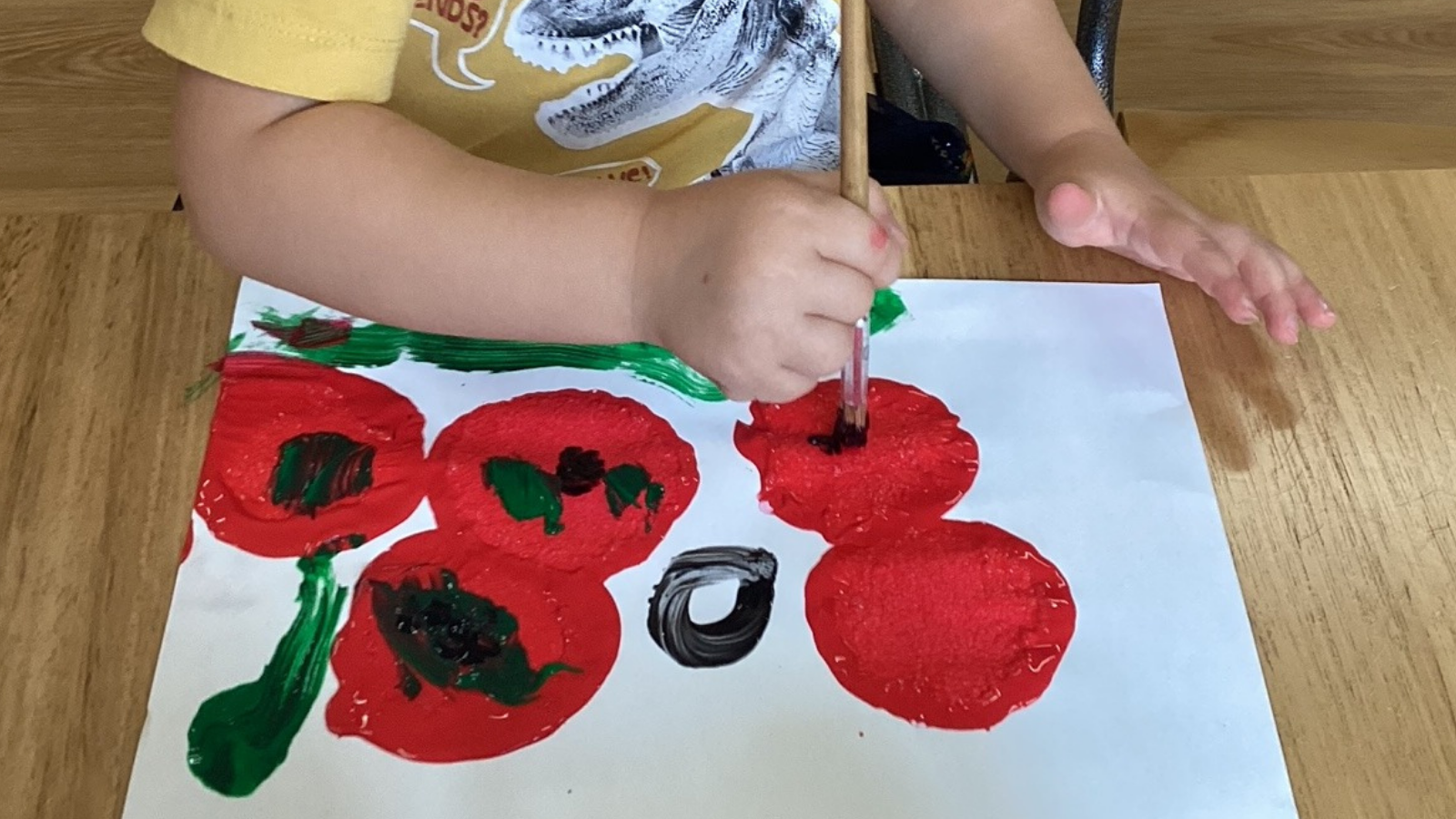
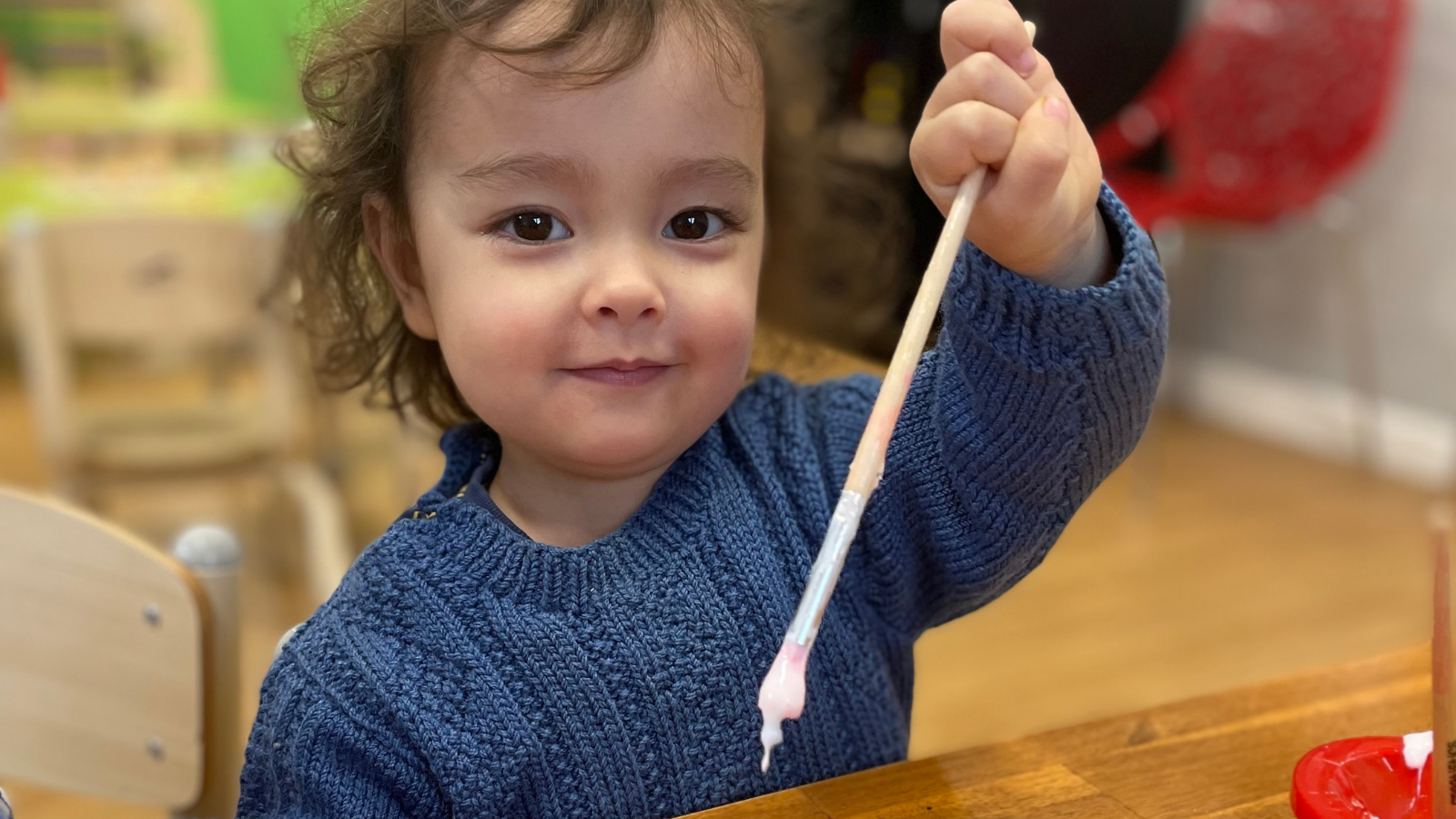
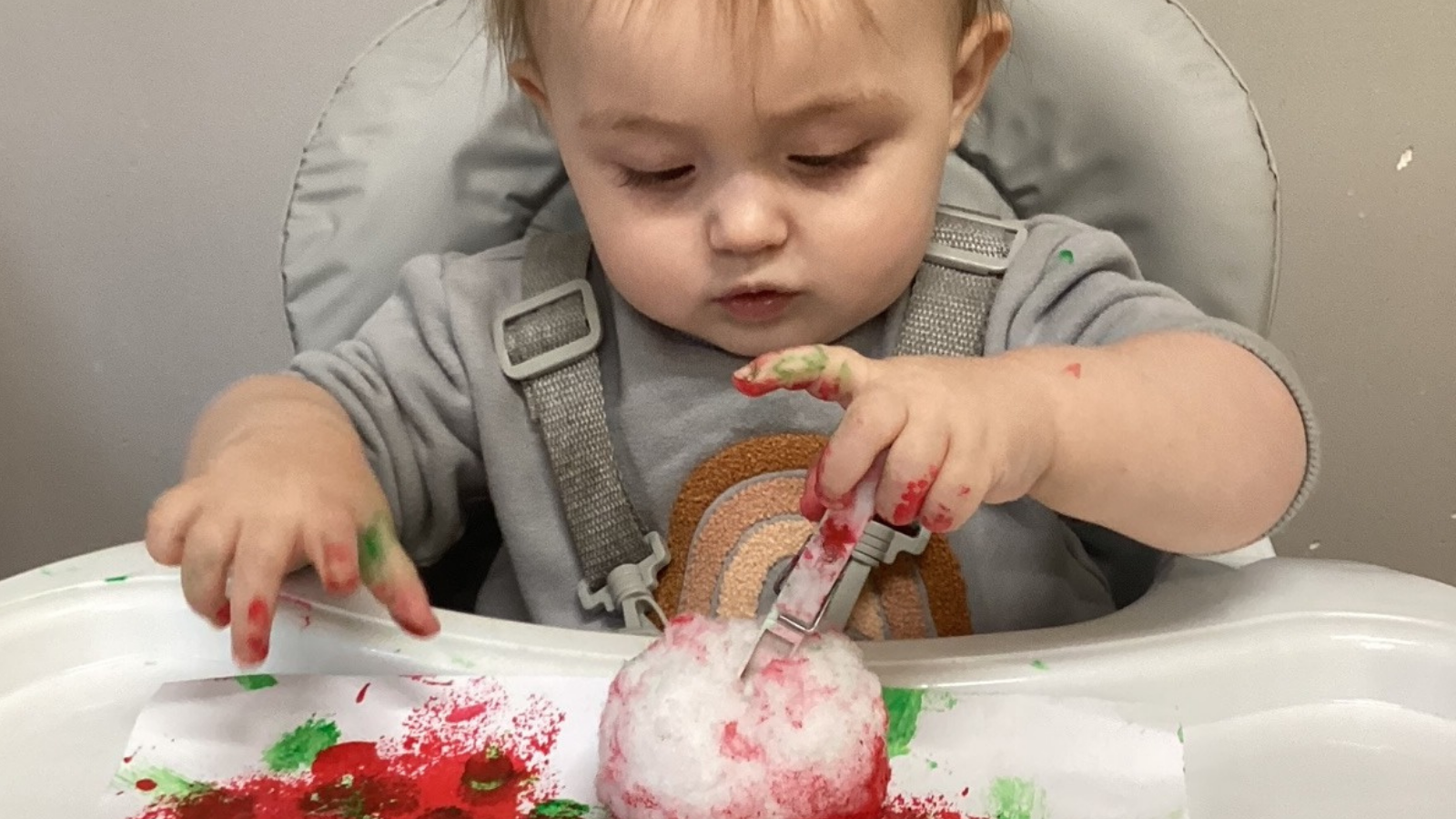
This activity was a great sensory experience, and the children loved stroking and squishing the soft cotton balls. Creating poppy paintings was a visually rich activity as well, with the different colour used to make their masterpieces. We love to watch the joy and curiosity of children as they explore new materials!
A key thematic idea associated with ANZAC Day is the concept of mateship. Mateship is a widely recognised and integral part of Australian culture and identity, and a value that is becoming increasingly relevant to the children in the 3-5 year old room as they develop their competence in social situations and cement their friendships.
Abstract ideas such as caring, friendship, compassion and helping others are more difficult to conceptualise than tangible nouns, however children at this age have the developmental understanding and social-emotional experience to connect with emotions like these that have relevance to their daily lives. One example of this is the notion of mateship as the ‘Diggers’ supported their comrades in the trenches. This furthers their connection with the ANZAC’s experiences through aiding their ability to relate to unfamiliar situations, such as war, by pairing them with emotions they know well.
At Choklits, we pride ourselves on integrating significant community events into our curriculum, particularly those like ANZAC Day that are strongly linked to the Australian identity. Having knowledge of and appreciation for the commemoration of our history is something we strive to instil through our program as it strengthens children’s understanding of community and their place in the world.
We are thrilled to announce that Sue Brewer, our Choklits Child Care Ringwood Centre Director has been crowned Melbourne’s Best Child Care Worker by the Herald Sun; a truly wonderful achievement. In a selection process that speaks to her excellence and lasting impact on families, nominations were submitted from which a short list was published, wherein Sue won by the public’s vote.
Anyone who has met Sue can speak to her warm, welcoming personality and calm air that immediately puts people at ease, both of which are immeasurably helpful in her work with the children at Choklits. A prestigious award like this is an exciting moment for both Sue and our Choklits community, and we are so glad to see Sue’s dedication and talent being recognised in this way.
Having been a part of the Choklits community for 26 years to date, from her humble beginning as an assistant to her current position as Choklits Ringwood Centre Director, Sue is a keystone of our team and exemplifies what Choklits is all about as a workplace. We have established an environment that not only nurtures children but staff as well, with ample professional development opportunities to support educators in building a career in the early childhood sector.
Just like Sue says, early childhood education is all about “giving children a great start to the rest of their life”, so the most important thing to us when it comes to educators at Choklits is that they are “really passionate about their job – that this is their goal and their career that they want to do”. As we are fortunate to have an incredibly skilled and experienced team, backed by knowledgeable people like Sue, many educators with varying levels of experience have found a home at Choklits. From traineeship’s to work experience applicants, our strong foundation has helped many educators flourish.
Choklits is proud to be an equal-opportunity employer committed to inclusion and diversity, and we consider the diversity of our team at Choklits to be one of our biggest strengths. Our educators come from all walks of life, which means that our team is comprised of people of a variety of ages, nationalities and languages. This diversity affords us a wide range of perspectives and approaches, which broadens everyone’s understanding and sparks thought-provoking discussions, culminating in an improved experience for the children in our care and extending the education of our fabulous staff members.
We believe it’s the differences we see in each other including our backgrounds, experiences and how we think that is our strength in learning, as we so often say, ‘Learning is Everywhere’.
As Sue pointed out to the Herald Sun, the close-knit Choklits network shines true in all we do as we’ve had the joy of former Choklits’ children coming back to do their childcare placement with us, allowing the love of learning we aim to instil to complete a full circle.
Here at Choklits, we pride ourselves on excellence, which to families means they can be reassured their child is in exceptional hands, and to educators means that you’re on a team of talented, passionate educators who are committed to setting children up for success and fostering a love of learning. Working alongside people like Sue, who have over 26 years of experience under their belts, is a prime mentorship opportunity.
We know that children thrive in environments where they receive individualised attention, so at Choklits we have small group sizes and high educator to child ratios, which gives lots of opportunities to build individual connections and develop meaningful relationships with the children. At Choklits, educators are free to do what educators do best – working with children! Our centres are run by centre directors (like Sue), and our chef Helen prepares all the meals, snacks and co-ordinates meal times, so educators can remain focused on the children and their needs at all times.
As an early learning centre, we naturally spend the vast majority of our time focused on and discussing children, as they are the reason our educators love the work they do so very much, however, instances like Sue being named Melbourne’s Best Child Care Worker remind us of the value of a great workplace as well. Great workplaces and environments help educators thrive and when educators thrive our get children benefit too.
If you have a passion for early childhood education and are interested in joining the Choklits team, we would love to hear from you! Please take a look at our employment page for more information.
Gardening with kids is a fun and hugely rewarding experience for parents and children alike.
At Choklits Child Care, we love taking advantage of the beautiful Australian weather and spending time outside. Our expansive outdoor play space also includes a garden, where we enjoy getting the children involved in growing the veggies and herbs that will become part of their meals at our centre. We all know the benefits of locally and sustainably sourced ingredients, and what better way to shorten the supply chain by growing things right here onsite?
Here’s a video from the beginning of last summer, showing our wonderful toddler class preparing and planting our veggie patch for the new season.
Gardening is a fantastic sensory experience for children; they get to dig holes in the dirt, stroke the soft leaves and experience different textures from various plants, listen to the soothing noise of running water and enjoy the outdoors. Research shows that spending time outside is incredibly beneficial for children, as it engages the senses, supports creativity and aids problem-solving skill development. If you’re interested in a more in-depth discussion about the benefits of children engaging with nature and learning outdoors, take a look at our blog on the topic here.
Gardening also helps to develop children’s fine motor and gross motor skills, through digging holes, tipping a watering can or controlling a hose, planting seeds and picking veggies. It’s especially great for encouraging them to cross the midline, improving dexterity, using both hands and moving their hands independently to complete a task.
Tending to plants and watching them grow instils a sense of responsibility and achievement in children, particularly when they get to see the results of their hard work. The tasks and outcomes involved in gardening are brilliant for developing self-efficacy as a direct, tangible effect of their actions can be observed. Additionally, the patience required when waiting for a plant to grow, and then getting to enjoy the result, is very gratifying.
Growing your own food in a veggie patch is an amazing way to help children engage with the food preparation and cooking process. It can be really helpful for fearful or fussy eaters who are reluctant to try new things, as they are more likely to be excited about trying something they have grown themselves. We’ve seen this firsthand at Choklits; the children love it when Chef Helen includes our own produce in their meals!
We often think of gardening as being an outdoor activity that requires lots of space, and large garden beds or veggie patches like the ones we have at Choklits certainly do, but gardening is totally achievable in small spaces as well. Most plants can live happily on a sunny windowsill or balcony if you don’t have a garden, and growing plants in little pots is perfect for children who like to pick things up to view them from every angle.
To keep it budget friendly and add an extra element of educational fun into the mix, give making your own pots out of newspaper a try! Its so easy a toddler can do it with just a little help, and this video from Gardening Australia is a great, slowly stepped through tutorial. All you need is newspaper, a cup to help you shape your pot and something to hold it together (staples, sticky tape or string will all work). We’d love to hear about it if you give it a try!
These newspaper pots are also biodegradable, so can be planted directly into a larger pot or garden bed when your seedling is ready. This makes them perfect for children to watch the seed sprouting process up close, and then be able to easily plant them afterwards.
Another fun thing to try in place of seeds is germinating produce you already have at home. The best thing about this is you can just use water if you’d rather not have the mess of soil inside. Good candidates for this include:
If you are gardening with small pots or inside, an excellent alternative to a watering can is a spray bottle. They’re smaller and lighter than most watering cans, making them easier for little hands to control, and eliminate the possibility of big spills or accidents to clean up. Additionally, they allow children to develop grip strength and prevent flooding a small pot with water.
Our last tip to get kids involved in gardening is to make it arty. Letting them paint or colour in their own pots is lots of fun and turns your garden into a beautiful art gallery as well! Paper cups are great for this, like our kindergarteners decorated in the video below with Dee, the Projects & Group Operations Manager at Choklits.
We hope you’ve enjoyed this blog about gardening with kids! If you give any of these things a try, or have a story to share about your own gardening experiences, we’d love to hear about it next time your child is at Choklits.
Shyness is a normal developmental stage in children. It is an emotion that influences how a person feels and behaves around others, and is often exacerbated in unfamiliar situations, particularly for children. Physical symptoms of shyness include trembling, tightness in the chest or blushing and feeling speechless, breathless or shaky. Shyness is associated with feeling self-conscious, nervous, timid, uncomfortable, bashful or insecure.
.
Almost every child will feel shy occasionally, but shyness is certainly a spectrum, and impacts the lives of some children much more significantly. Shyness can present in many different ways, but typically shy children are anxious and inhibited when interacting in social situations or unfamiliar situations.
Shy children usually prefer to observe first, rather than join in immediately, particularly in group situations or with new activities, as they feel more comfortable when they are able to predict what will happen next. Shyness is likely to be exacerbated when meeting new people or if a child feels they are on show or need to perform, such as when speaking in front of others.
There are a multitude of factors working in tandem to create your child’s personality. Some of the potential causes of shyness in children include:
It can be difficult to strike the balance between supporting your child and encouraging them to participate, particularly when there is often external pressure on parents in these situations. Here are some helpful phrases you can use:
If your child’s shyness is negatively impacting their everyday life and stopping them from participating in age-appropriate and developmentally appropriate activities and experiences, it is time to seek professional help from your child’s GP or paediatrician who can refer you to specialist services, like a psychologist or counsellor.
You might have heard that there are upcoming changes to the Child Care Subsidy (CCS). We’re going to lay out the CCS changes, who is eligible for higher CCS payments and how the payments will increase right here…
From the 7th of March 2022, families with two or more children aged five and under in care will receive a higher subsidy rate for their younger child or children.
The ‘standard rate child’, usually the eldest CCS eligible child aged five or below, will continue to receive the standard CCS rate they do right now, and any younger eligible children, ‘higher rate children’, will receive the increased CCS rate.
In summary, there will be no change to your CCS for you oldest child in care (or if you have only one child in care), the increases only apply to your second and subsequent children attending child care.
No, families who are already getting the CCS don’t need to do anything to receive this CCS increase. Your CCS will automatically increase for all eligible second and younger children from the 7th of March 2022.
There is great news for combined families under the updates to the Child Care Subsidy, as it is being enhanced to recognise combined families from July 2022. For families where both parents, who are partnered, are individually eligible for CCS for different children, the higher rate will also apply to second and additional children under five years of age. Services Australia will backpay the higher subsidy amount families are eligible for from March to July 2022.
However, if you’d like to claim the increased CCS immediately from the 7th of March 2022 for your combined family, rather than waiting until July, you can. You’ll have to choose one partner to make the CCS claim for all of the children, and that person will need to lodge a new CCS claim. If you’re looking to take this route, make sure to put your new claim in as soon as possible, as claims can only be backdated by 28 days, and be sure to let us know so we can update the enrolments of your children at Choklits Child Care Centre.
Head to the government website listed below for further information.
No, children who are entitled too and currently receiving the Additional Child Care Subsidy (ACCS) will continue to receive their current ACCS rate.
All these changes should come into effect automatically so you don’t have to worry about doing anything right now.
If you have further questions please head to the official government site which contains more information provided by Services Australia about the higher CCS.
Or, you can always email us with any questions you have [email protected].
The 17th of February is Random Acts of Kindness Day, making this the perfect time to talk about why incorporating random acts of kindness into your child’s day can be beneficial for them and for others.
Acting with kindness, both to oneself and to others, is a significant focus of our program here at Choklits Child Care, and is something our educators actively seek to facilitate, model and encourage in all interactions. As kindness is a major part of our education philosophy, Random Acts of Kindness are absolutely something we can get behind.
A Random Act of Kindness is an unexpected, unrequested act of thoughtfulness, generosity or helpfulness done for someone else. The term is thought to have been coined by journalist and author Anne Herbert in 1982, coming from her popular quote “practice random kindness and senseless acts of beauty”.
To put it simply for kids, a Random Act of Kindness is something nice you can do for another person to make them feel happy.
Kindness is an essential trait that children are learning about and developing in their early years as they come to understand others’ feelings and the impact of their actions and decision upon their friends. Being kind to others is an essential component of making friends, and is very rewarding.
Introducing the idea of doing Random Acts of Kindness for others is often appealing for kids, who naturally like to feel as though they have done something good, particularly when they get the reward of seeing the happy reaction their kindness garners. Supporting your child’s kind gestures is also incredibly rewarding for parents, as we get to share in the joy and gratification of doing nice things for others.
We all know that being kind makes us feel good, and according to the Random Acts of Kindness Foundation, who are the experts on the research in this area, kindness is “contagious, teachable and makes you feel all fuzzy inside”. In Cedars-Sinai’s blog, The Science of Kindness, Dr IsHak explained that random acts of kindness have been linked to releasing oxytocin and dopamine, the ‘feel-good chemicals’, which are associated with happiness and contentment. This is backed by the Mayo Clinic’s research, which has showed that being kind also increases the production of serotonin, increasing satisfaction and wellbeing, and causes the reward centres in your brain to light up.
Not only does kindness improve your mood, it carries other health benefits too. Kindness triggers the release of endorphins, the body’s painkillers and has been found to decrease social anxiety and feelings of stress. Additionally, being kind can lower your blood pressure and even might extend your lifespan!
So we know that being kind is scientifically proven to make us happier and healthier, and it brightens the day of someone else, but how can we help to include it in our children’s lives? They can’t buy a stranger a coffee, but there are countless other ways to incorporate kindness for their family, their friends and strangers into your child’s life. Keep reading for our suggestions!
We hope you’ve enjoyed learning about how great kindness can be for you! If you’re able to brighten someone’s day with a Random Act of Kindness we’d love to hear about it, so let us know next time you come in to a Choklits Child Care Centre.
Does your family sit down together for a meal together every day? If not, you may want to consider doing so more often. Why? Because there are a multitude of benefits, for both parents and kids alike, that stem from sharing regular family meals (and most importantly, it doesn’t have to be dinner!).
Life is busy. As parents, there are always more things to clean, more work to get done and another activity to go to, which can make life feel like a whirlwind. When things get busy, it is often easier, or more convenient, to eat dinner on the go, or feed the kids first before your partner gets home, but science has shown that you should reconsider forgoing family mealtimes, as by skipping them, you and your children might be missing out on a host of physical and emotional health benefits.
Eating together as a family results in children eating a wider variety of food, and both parents and children who participate in regular family mealtimes are twice as likely to meet the recommended daily intake of fruit and vegetables, a study by Harvard researchers found.
These findings are echoed by the Academy of Nutrition and Dietetics, which explains that eating as a family also increases children’s consumption of vitamins and minerals, and results in eating less sugar, saturated fats and fast food. These positive associations with nutritious food that family mealtimes nurture continue well past childhood, and develop into healthy eating habits which last for life.
This improved diet translates to a decreased risk of obesity, both as a child and an adult. A study published in the Journal of Paediatrics found a direct correlation between the frequency of shared family meals in childhood and a reduction in obesity 10 years on.
Eating together as a family drastically reduces the risk of teenagers participating in risk-taking behaviours like alcohol and substance use, and those children who participate in family mealtimes have a halved risk of alcohol and drug addiction. A Canadian research study also found that frequent family mealtimes prevented violent behaviours in children, teens and adults.
The comfort provided by regularly eating together as a family can be instrumental in supporting children’s mental and emotional health. Columbia University found that children and teens who regularly ate meals as a family were half as likely to experience mental health issues like depression, anxiety, eating disorders and suicidal thoughts. Stanford Children’s Health offers a potential explanation for this, stating that family mealtimes provide security, and can increase children’s self-confidence and ability to talk about their feelings.
Regularly eating meals together is an excellent opportunity to bring your family closer together, as it provides a space for family members to discuss their thoughts, feelings and ideas, increasing children’s confidence in being able to share the good and the bad parts of their life with their parents. In turn, this creates a supportive and open environment for kids to be able to speak up when they might need help.
Furthermore, a study by a psychoeducation professor in Montreal found that the social interaction and discussion of relevant issues that is facilitated during family mealtimes can make children more adept communicators. Columbia University echoes this, finding that teenagers who frequently eat meals with their families are more likely to describe their parents are someone that are comfortable confiding in and feel that their parents are proud of them.
This benefit might surprise you, but children who regularly eat with their families have a wider and larger vocabulary than their peers who do not. This translates to less difficulties at school as they grow older, as family mealtimes are shown to increase academic performance and correlate with better behaviour in school.
For adults, some of the effects of family mealtimes are similar to those they have on young children, like increased self-esteem, decreased risk of depression and better nutrition from eating a greater variety of fruits and vegetables and less fast food. However, one benefit that is notably different, is that eating together as a family is directly related to a reduced incidence of dieting and harmful diet culture in adults.
So, now that you know all about the benefits of eating together as a family, how can you make the most of mealtimes? Here are some of our Choklits top tips to make family mealtimes a positive experience for parents and kids.
We hope you’ve enjoyed this blog on making the most of family mealtimes, and have learnt something about why they are so beneficial for parents and children alike. Next time you sit down for dinner with your family, remind yourself of the wonderful service you are doing your children by setting them up for success at school, positive eating habits, strong family relationships and good mental health.